

The Dawn of AI in Digital Marketing: 2026 and Beyond
The landscape of digital marketing is always changing, but 2026 stands out as a tipping point—one where artificial intelligence will finally take center stage. For years, marketers have flirted with automation and data-driven insights, but the speed and sophistication of AI adoption are about to shift into high gear. What’s driving this sudden acceleration? Simply put: necessity. As consumers demand even more relevant, seamless online experiences, brands are turning to AI not just to keep pace, but to leap ahead.
In 2026, the phrase “how AI will transform digital marketing” will move from prediction to everyday reality. Global ad agencies and scrappy startups alike are doubling down on AI-powered solutions, from machine learning algorithms that analyze billions of data points in seconds to generative tools creating content at scale. Statista estimates that by 2026, marketers worldwide will spend over $107 billion on AI solutions—up nearly 70% from just three years prior. The reason is clear: those who fail to adapt risk becoming obsolete in a hyper-competitive, always-on marketplace.
Brands are no longer asking if they should use AI—they’re asking how fast they can roll it out. Whether it’s automating labor-intensive tasks or unlocking new levels of personalization, the pressure to innovate is relentless. Agencies are restructuring teams, hiring AI specialists, and overhauling legacy platforms to stay relevant. Forget incremental change; we’re looking at a full-scale digital transformation, with AI at the helm.
Automating Workflows: Efficiency Gains and Cost Savings
Let’s be honest, no marketer dreams about scheduling thousands of social posts or manually sifting through campaign reports. This is where AI steps in and shines. By 2026, automation won’t just be a buzzword—it’ll be the backbone of digital marketing operations. AI-driven platforms will handle everything from automated ad placements to real-time bidding, freeing up creative teams to focus on strategy and big ideas.
Consider automated ad placement, for example. Instead of manually adjusting budgets or targeting criteria, AI algorithms will instantly analyze which channels are performing best and shift spend accordingly. Google and Meta already offer versions of this, but by 2026, the level of nuance and speed will make today’s tools look primitive. A campaign that once took weeks to plan and launch can be executed in hours, monitored around the clock, and optimized on the fly.
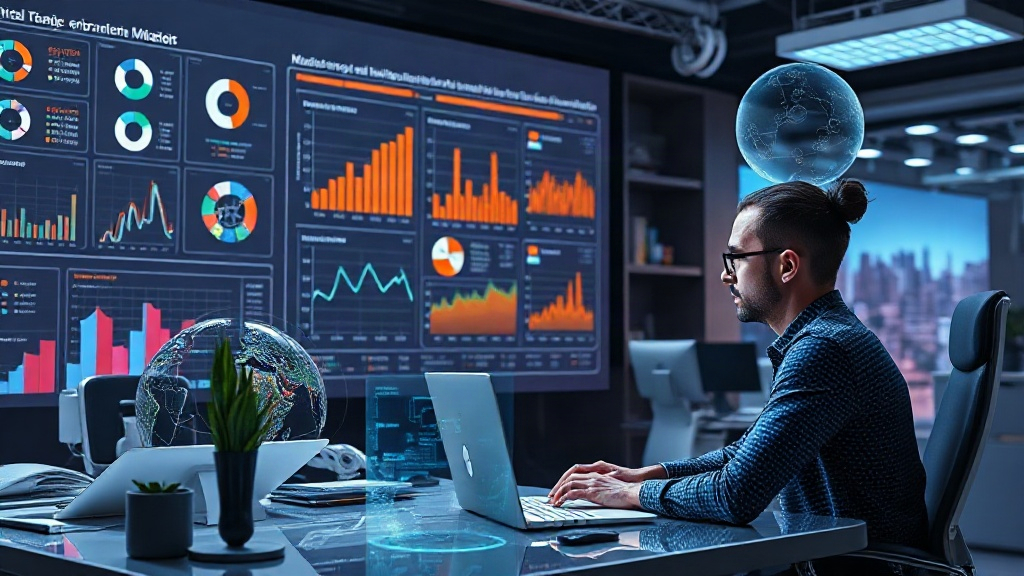
Reporting and analytics dashboards will also get a major facelift. AI will automatically generate detailed performance summaries, highlight anomalies, and even recommend next steps. Gone are the days of exporting endless spreadsheets or hunting for actionable insights. And let’s not forget social media scheduling—AI tools will predict the best times to post, select optimal content, and even generate hashtags tailored to trending topics and audience sentiment. The upshot? Marketers can achieve more with less, slashing operational costs by as much as 40% in some cases.
Personalization at Scale: Revolutionizing Customer Experiences
Personalization used to be about plugging a customer’s name into an email. In 2026, it’ll be about orchestrating entire journeys that feel tailor-made for each individual. This is where AI’s real magic happens: hyper-targeted messaging, dynamic content, and individualized experiences—delivered at scale. Imagine logging onto an e-commerce site and seeing product recommendations that reflect your browsing history, recent purchases, and even your current mood, all inferred by AI analyzing your digital footprint in real time.
This level of personalization isn’t just a nice-to-have; it’s quickly becoming table stakes. Brands using AI-driven segmentation and dynamic content are already reporting 3x higher engagement rates and up to a 25% boost in conversion rates. And the technology is only getting smarter. AI systems will analyze thousands of data signals—location, device, weather, browsing patterns—to deliver the perfect message or offer at just the right moment. It’s the difference between feeling like a number and feeling understood.
Loyalty, too, stands to benefit. With AI, brands can anticipate customer needs, predict churn, and trigger retention campaigns with uncanny accuracy. Think of Spotify’s Discover Weekly, but customized for every touchpoint—a seamless stream of interactions that keeps customers coming back for more. In the battle for attention, relevance wins, and in 2026, AI will be the engine powering that relevance.
Advanced Analytics: Real-Time Decision Making and Optimization
One of the cornerstones of how AI will transform digital marketing in 2026 is its ability to turn oceans of data into actionable insights. Traditional analytics platforms often lag behind, offering insights after the fact. AI flips the script, delivering real-time recommendations and predictive modeling that keeps campaigns a step ahead. Imagine launching a campaign in the morning and knowing by lunchtime which creative, placement, or audience is driving the best results—without lifting a finger.
Machine learning models are the unsung heroes here. They don’t just crunch numbers; they spot patterns in customer behavior, forecast future trends, and even simulate the impact of potential changes before marketers make them. Want to know if increasing your social ad spend by 15% will drive more leads? AI can simulate that scenario, showing projected ROI based on historical and contextual data.
Marketers are already seeing the benefits. A 2025 Deloitte survey found that companies using AI-powered analytics tools achieve 35% faster campaign optimizations and 22% higher ROI on average. And that’s just the beginning. By 2026, expect AI dashboards with natural language queries—”Which customer segments are most likely to convert this week?”—and instant, data-driven answers. The days of making decisions on gut instinct alone are numbered.
AI-Enhanced Content Creation and Creative Processes
Creativity and technology used to exist in different worlds. Not anymore. In the near future, AI will be the secret weapon behind some of the most compelling content and visuals on the web. Copywriting tools powered by large language models can draft ad copy, blog posts, or social updates in seconds—always on-brand, always optimized. And they’re not just churning out generic text; these platforms learn from engagement data to sharpen their output over time.
Visual design is also getting an AI makeover. Marketers will use generative tools like Adobe Firefly or Canva’s Magic Design to whip up stunning graphics, social tiles, and even video clips, all tailored to specific audiences. AI can analyze which colors, fonts, and layouts resonate with viewers, then suggest tweaks that boost interaction rates. The result? Campaigns that not only look polished but drive measurable results.
Take video production. AI-powered editors can automatically cut, splice, and even personalize video clips for different audience segments, streamlining what was once a painstaking process. For brands trying to maintain a consistent voice and visual identity across hundreds of channels, these tools are a game changer—delivering both quality and quantity at a fraction of the traditional cost.
Competitive Advantage: Staying Ahead in the AI-Driven Marketplace
By now, it’s clear that understanding how AI will transform digital marketing in 2026 is about more than just keeping up—it’s about staying in the race at all. The hard truth? Those who drag their feet risk irrelevance. Forward-thinking brands are already reorganizing their teams around AI capabilities, retraining staff, and investing in upskilling to prepare for what’s next.
There are risks, certainly. Over-reliance on automation can lead to bland, generic messaging if not managed carefully. Data privacy concerns are also front and center, with regulations like the EU’s AI Act forcing companies to rethink how they collect and use consumer data. But the opportunities far outweigh the challenges. Early adopters are seeing faster growth, higher margins, and stronger brand loyalty.
So how can businesses prepare? Start by auditing current workflows and identifying manual bottlenecks ripe for automation. Invest in AI training—not just for technical teams, but for creatives and strategists as well. Build partnerships with tech providers and stay nimble; the landscape is shifting fast, and adaptability is key. Those willing to embrace change—warts and all—will own the digital marketing conversation in 2026 and beyond.
Conclusion: Preparing for the Future of Digital Marketing
The writing is on the wall: AI isn’t just a shiny new tool, it’s the driving force behind the next era of digital marketing. By 2026, expect automation, personalization, and real-time analytics to become the pillars of high-performing marketing teams. Brands that harness AI will find themselves delivering richer, more relevant experiences while saving time and money in the process.
For businesses looking to future-proof their strategies, the path is clear. Start small, experiment with AI-powered tools, and build a culture that values innovation. Don’t ignore the human element—AI is a co-pilot, not a replacement for creativity and intuition. And keep a close eye on the competitive landscape; those who seize the AI advantage now will define what success looks like for years to come.
One thing’s certain: the digital marketing world of 2026 will bear little resemblance to the landscape we know today. The only question left is, will you be ready?
Frequently Asked Questions
How will AI personalize digital marketing campaigns in 2026?
In 2026, AI will leverage advanced data analytics and real-time customer insights to deliver highly personalized marketing content. This will enable brands to target individuals with tailored messages, offers, and experiences, significantly improving engagement and conversion rates.
What role will AI play in content creation for digital marketing?
AI-powered tools will automate and enhance content creation by generating high-quality text, images, and videos based on audience preferences. Marketers will use AI to produce relevant, timely, and engaging content at scale, optimizing campaigns for maximum impact.
How will AI improve customer experience in digital marketing by 2026?
AI will enable seamless, omnichannel customer interactions through intelligent chatbots, voice assistants, and predictive analytics. These technologies will anticipate customer needs, resolve queries instantly, and provide personalized recommendations, enhancing overall satisfaction.
What impact will AI have on digital advertising strategies in 2026?
AI will optimize ad targeting, bidding, and placement by analyzing vast datasets and predicting user behavior. This will result in more efficient ad spend, higher ROI, and reduced wastage, allowing marketers to reach the right audience at the right time.
Will AI affect the role of human marketers in digital marketing?
While AI will automate many routine tasks, human marketers will remain essential for strategy, creativity, and ethical decision-making. AI will empower marketers to focus on high-level planning and innovation, making their roles more strategic and impactful.